This website uses cookies

We use cookies to enhance your experience and support COUNTER Metrics for transparent reporting of readership statistics. Cookie data is not sold to third parties or used for marketing purposes.

Skip to main content
null
NAPGO
  • Menu
  • Articles
    • Case Report
    • Conference Abstracts
    • Conference Bulletin
    • Expert Reviews
    • Original Research
    • Systemic Reviews
    • All
  • For Authors
  • Editorial Board
  • About
  • Issues
  • search
  • X (formerly Twitter) (opens in a new tab)
  • RSS feed (opens a modal with a link to feed)

RSS Feed

Enter the URL below into your favorite RSS reader.

http://localhost:21113/feed
ISSN 2769-5336
Original Research
Vol. 3, Issue 2, 2024December 01, 2023 EDT

A Low Budget Perineal Repair Model

Eric Schmitt, MD, Jose Roble, MD, Jamie Humes, MD,
SimulationPerineal LacerationMedical EducationCost effective
Copyright Logoccby-4.0 • https://doi.org/10.54053/001c.90693
Photo by Tim Cooper on Unsplash

Articles in Vol. 3, Issue 2, 2024

Vol. 3, Issue 2, 2024
  • Wellness and diversity, equity, and inclusion support across residencies in core specialties - a national cross-sectional study
    Maggie WongLena FaiselDani ZoorobMalik MaysDanielle DeverJames Van Hook
  • Virtual schooling during the covid pandemic: the effect on high school retention for adolescent mothers
    Beatrice SoderholmJara CrawfordTracey WilkinsonDavid Haas
  • Vaginal cuff dehiscence with small bowel prolapse 10 years after vaginal hysterectomy
    Brandon MorehartDennis SchumacherDennis Lutz
  • Utilization of enhanced recovery after surgery (eras) protocol in gynecologic surgery
    Rachel HartmanSanela AndelijaNatalie HurlockJames BaronStephen ZweibachBradley SipeTiffany TonismaeMiriah Denbo
  • Uterine rupture secondary to pyomyoma leading to intraabdominal abscesses following an uncomplicated vaginal delivery
    Olga Colón-MercadoRachel HartmanJames BaronStephen ZweibachBradley SipeTiffany TonismaeLauren Davis
  • Uterine didelphys with transverse vaginal septum: a case report and review of the literature
    E. Baylee EdwardsKatherine GretteNicolette HollidayCandice Holliday
  • Twin-twin transfusion syndrome in the setting of covid-19 pneumonia: a case report
    Callie HamaiMegan WhiteTuhlei BreannaEric JohannesenElla SpeichingerAlbert Hsu
  • The impact of covid-19 vaccination on intrauterine fetal demise rates among pregnant women in the Metro-Detroit area
    Nicolina SmithMary CondonMariam AyyashGregory Goyert
  • The face of wellness, diversity, equity & inclusion: a national review of obstetrics & gynecology programs
    Malik MaysDani ZoorobLena FaiselDanielle DeverShahnaz VellaniJames Van Hook
  • The current state of medical informatics curricula in undergraduate medical education: a national survey
    Lauren LeibyAnita TamirisaDani ZoorobCatherine VanHook
  • Supplementing provider counseling with an educational video for scheduled induction of labor
    Kelsey PapeSierra CroweDavid Haas
  • Sorrows and the joys of tomorrow: analyzing maternal events during delivery and post-partum in the covid-19 pandemic through utilizing the epds
    Ala Addin Sid AhmedMaheen IrshadFederico Mariona
  • Second case of spontaneous left ureter rupture during normal spontaneous vaginal delivery
    Emily DeckerCollette LessardDennis Lutz
  • Sacral neuromodulation in a patient with pseudocholin-esterase deficiency
    Nadia MegahedPrapti SinghYaseen MalekiJames KirbyJulie Stewart
  • Religious and cultural diversity support across US based obstetrics and gynecology residency program
    Nabila AzeemDani ZoorobYasmin HasbiniJuliana ColvinAriel CohenJames Van Hook
  • Reduction in birth rates and preterm births following the emergence of COVID-19 pandemic in Michigan
    Mariam AyyashMegan McNittGregory Goyert,Madhurima KeerthyMonique Swain
  • Racial bias in cesarean decision making
    Sarah EdwardsQuetzal ClassCatherine FordTamika AlexanderJonah Fleisher
  • Race/ethnicity bias and its role in severe maternal morbidity: a clinical perspective
    Elliot LevineLeah DelfinadoCarlos Fernandez
  • Pregnancy outcome after placement of laminaria and subsequent second trimester removal
    Margaret MonroeTiffany TonismaeRaphael Guichard
  • Preferences and satisfaction of pregnant patients and ob nurses regarding monoclonal antibody infusions for the treatment of covid-19 pneumonia
    Katherine ChenDani ZoorobDavid HarperTracy BuderSamantha AchaeurJames Van Hook
  • Perinatal and maternal outcomes in singleton preterm births of african american versus caucasian women with hypertensive disorders
    Chinemelum OrizuJose PrietoTiffany Tonismae
  • Patient variables which lead to election of early vs. late post cesarean section discharge
    Benjamin KitkoMelissa VassasJames WilsonMichael Krew
  • Partner support has limited influence on clinical outcomes in pregnant patients with substance use disorder
    Neil PatelCynthia CockerhamLeon SuArnold StrombergBarbara ParillaJohn O'Brien
  • Optimal glucose testing for the detection and diagnosis of prediabetes and type ii diabetes mellitus in reproductive age women with polycystic ovarian syndrome
    Wenqi OuyangJaycee HoushRaquel IbarraKathleen GroeschTeresa WilsonPaula Diaz-SylvesterKristin DelfinoJ Ricardo Loret de Mola
  • Obstetrical and neonatal outcomes of pregnancies complicated by sarcoidosis
    Erin EganLaura DiGiovanniChristian AscoliNadera Sweiss
  • National chorioamnionitis trends: Geospatial analysis of vulnerable communities
    Joanne ChanNicholas PetermanBradley KapturRachel MannBrittany VillKristine Carpenter
  • Maternal and infant morbidity and mortality in extremely premature infants - a single centered study in detroit michigan between 23-26 weeks of gestation
    Mariam AyyashKrishna MajmundarGayathri VadlamudiDavid DaCostaGregory Goyert
  • Low-dose aspirin initiation rates in appropriate candidates at an academic residency program in the midwest
    Alexandra Mahdasian-MillerShachia JacksonDavid HaasCaroline Rouse
  • Impact of previous gynecologic care and gynecology service consults on abnormal uterine bleeding follow-up
    Khloe PastoreCaley PolkinghornNicolette CodispotiAnne TjadenLinda Yang
  • Identifying the palliative care needs of patients and families in gynecologic surgical oncology
    Klaudia KukulkaKarle WashingtonMary FaurotRachel AlexanderKevin CraigJean GoodmanErin Tuller
  • Hot yoga for pregnancy: a survey of hot yoga studio owners
    Elizabeth NikcevichViann Nguyen-FengBethany HansonShilpa Babbar
  • Homeopathic treatments of vulvovaginal candidiasis on youtube
    Breia ReedMaya BraggVeronica Mallett
  • Go nuts! Coconut oil as a patient-preferred alternative to commercial ultrasound gel
    Claire EdelmanCaroline RouseZiyi YangJoanne DaggyAnthony Shanks
  • Gastroschisis: To cut or not to cut?
    Mariam AboulelaAntonio Santos RocaAditi DeyPaul DanielsonTiffany Tonismae
  • Female dysorgasmia: an analysis of 19 patients who experience pain with orgasm
    Breton BarrierRaymond FosterMolly Greenwade
  • Factors that influence the choice for neonatal resuscitation in periviable deliveries
    Jessica YoungDiane CasiniTodd FosterTiffany TonismaePeter MarcusKelsey Montgomery
  • Evaluation of socio-economic and immune factors related to endometrial cancer
    Aneesh ChawlaStacy ParrTaylor BadgerEmily DirksKathleen GroeschTeresa WilsonPaula Diaz-SylvesterKristin DelfinoSarah NelsonJ. Ricardo Loret de MolaLaurent BrardAndrea Braundmeier-Fleming
  • Equitable time to treatment of severe hypertension among races at Cleveland Clinic Akron General
    Sarah DavisEstee GeorgeDavid BiatsRachelle AbdelnourCaroline MangiraNatalie Bowersox
  • Effect of pre-operative counseling on post-operative outcomes at the time of minor gynecologic surgery: a randomized control study
    Priscilla TingJason HoppeMichael Krew
  • Deciphering maternal ethnicity from state birth certificates: a perplexing quandary
    Jessica NelsonTiffany AzzarelloSteffen ChristensenThomas ArnoldDennis Lutz
  • Comparing delivery outcomes of concurrent use of mechanical dilation with low dose versus medium dose pitocin versus balloon catheter only
    Victor FeldbaumMaurice HordTiffany Tonismae
  • Colorectal adenocarcinoma presenting as a bowel obstruction in the second trimester of pregnancy
    Thomas ArnoldTracer OverlandDennis Lutz
  • Case of thoracoamniotic shunt placement for treatment of pleural effusion in the setting of congenital diaphragmatic hernia complicated by hydrops
    Antonio Santos RocaKelsey MontgomeryTiffany TonismaeDavid Kays
  • Buprenorphine induction using microdosing for the management of opioid use disorder in pregnancy
    Barbara Parillia
  • Atypical presentations of dicer1 syndrome in adults with juvenile granulosa cell tumor
    Callie HamaiSamantha SalmonArwa MohammadJean GoodmanMark Hunter
  • Atypical cerclage indication: a case report and review of the literature
    Rennan ZahariasWilliam PerezNicolette HollidayCandice Holliday
  • Association of gabapentin concentrations with opioid use after cesarean delivery
    David HaasRebecca SilvolaBobbie RayShelley DowdenAndrea MastersSara Quinney
  • Association between pregnant patients' characteristics and obtaining a biologic drug test
    Monika StoskuteAlexis BravermanDhanalakshmi Thiyagarajan
  • Arab american outcomes of pregnancies complicated by fetal growth restriction
    Nicolina SmithMichelle MillerRobyn GarciaGregory GoyertD'Angela Pitts
  • Application of the ovarian-adnexal radiological data-reporting system (o-rads) for ultrasound diagnosis and management of adnexal masses
    Carlos FernandezElliot LevineAbraham ShashouaIrma SodiniJacqueline LunaPena Maria de la Luz
  • A case series of four women with clear cell ovarian cancer, with unexpected atypical endometriosis as precursor lesions
    Abby LombardiEric JohannesenJane McElroyMark HunterErin TullerAlbert HsuJean Goodman
  • A Low Budget Perineal Repair Model
    Eric SchmittJose RobleJamie Humes
  • Conference Bulletin: Central Association of Obstetricians and Gynecologists - 2022
    North American Proceedings in Gynecology and Obstetrics
  • Donor Screening: Level of Sensitivity in Karyotype with GTG banding vs PGT-A with NGS
    Naveena DaramMeghan Ozcan
  • Contained Uterine Rupture Managed Conservatively after Vaginal Delivery
    Eric SchmittThomas ChoiJose RobleJohmark FarlettAbigail Schmolze
  • A systematic review of maternal exposures and the risk of autism spectrum disorders in their infants
    Shae N JansenKyle M BaughJames B AdamsChristina K FlynnDavid M Haas
  • Case Report: Dichorionic-Diamniotic Twin Pregnancy Complicated by a Migrational Anomaly Mimicking a Brain Neoplasm
    Eric SchmittPablo DelisSonia PintoVeronica RooksDonald Gloeb
NAPGO
Schmitt, Eric, Jose Roble, and Jamie Humes. 2023. “A Low Budget Perineal Repair Model.” North American Proceedings in Gynecology & Obstetrics 3 (2). https://doi.org/10.54053/001c.90693.
Save article as...▾
Download all (3)
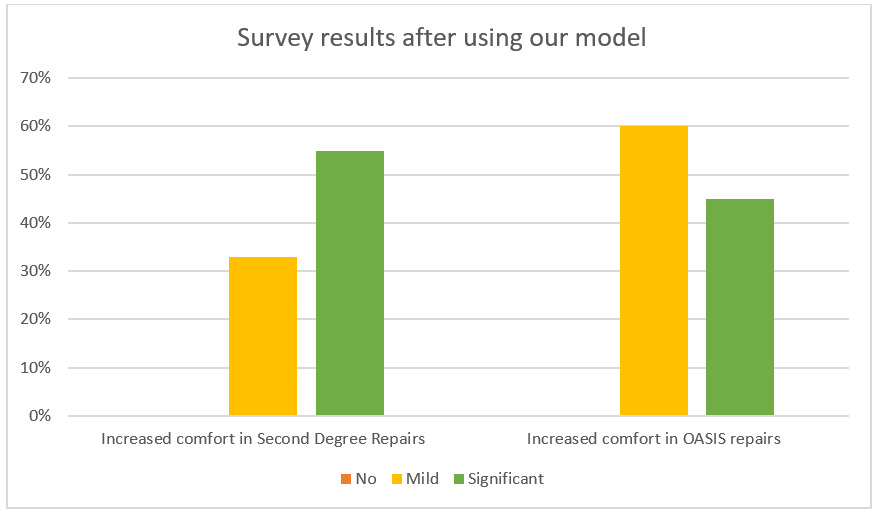
  • Figure 1. Survey results self-assessing laceration repair before and after using low-cost perineal model
    Download
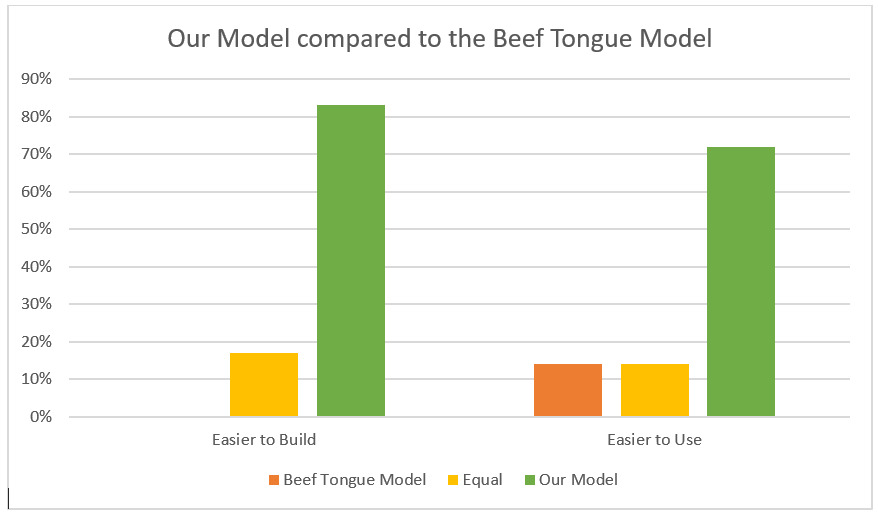
  • Figure 2. Comparison of low-cost perineal body and beef tongue model
    Download
  • Appedix A
    Download

Error

Sorry, something went wrong. Please try again.

If this problem reoccurs, please contact Scholastica Support

Error message:

undefined

View more stats

Abstract

BACKGROUND

We designed a low-cost model to prepare junior surgeons for the limited accessibility and visibility of perineal lacerations. This model has advantages over the classical beef tongue model including lower cost, being easier to build, and lasting longer.

METHODS

To build the model, follow the instructions as described in appendix A. Users were surveyed to compare the model against established simulated formats.

RESULTS

Each of our models can made in about 5 minutes and costs $2.09 in materials per model. Our model was directly compared to the classical beef tongue model used by many programs to simulate perineal repairs. At our program, it took residents on average 15 minutes to create their beef tongue model and cost $16.50 per model which had to be used immediately and discarded afterwards due to the meat spoiling. Overall, our model was seen as a useful training tool to be used in addition to our current curriculum. It does not require significant preparation to build or use unlike the beef tongue model, and it is sufficiently cheap for medical students and residents to take home.

DISCUSSION/CONCLUSION

Many medical models are prohibitively expensive for the individual to purchase or are reserved for rare training sessions in a simulation center due to their scarcity. This is an efficient and practical model which accurately demonstrates the limited space and visibility of perineal repairs while also allowing residents to conveniently practice 3rd and 4th degree repairs, which are so infrequent in modern obstetrical practice.

Introduction

Perineal laceration repair is one of the most common procedures delivering providers will encounter. Vaginal laceration rates vary based on patient characteristics, birth settings, and obstetrical care practices, but overall, 53-79% of women will sustain some type of laceration at vaginal delivery, mostly first- and second-degree (Smith et al. 2013; Rogers et al. 2014; Vale de Castro Monteiro et al. 2015). Third- and fourth-degree lacerations, also known as obstetric anal sphincter injuries (OASIS), The 1998-2010 US nationwide inpatient sample reported a third-degree laceration rate of 3.3% and a fourth-degree laceration rate of 1.1% for women who had vaginal deliveries (Friedman et al. 2015; Dudding, Vaizey, and Kamm 2008).

While laceration repair experiences typically begin early in residency, the chance to be involved in clinical training of higher degree lacerations is lessening. This data is not directly tracked by the Accreditation Council for Graduate Medical Education (ACGME) but can be extrapolated based on clinical trends. While the decreasing rate of operative deliveries and episiotomies has lessened the incidence of obstetric anal sphincter injuries (OASIS) (“ACOG Practice Bulletin No. 198: Prevention and Management of Obstetric Lacerations at Vaginal Delivery” 2018) it has, in effect, decreased the opportunities for learners to gain experience from complex perineal laceration repairs.

Simulations are an important tool in training. They promote critical thinking, and it is a safe way to apply concepts in a stress-free environment. Simulations in obstetrics and gynecology improve team performance and decrease patient morbidity (Wu et al. 2019). Current training models, like the beef tongue and silicone replicas, do have the advantage of a more lifelike tactile sensation. But these models are more costly, can only be used once, and are technically difficult to construct (Illston et al. 2017). Thus, our team set out to design a model to simulate perineal laceration repair that is affordable, reproducible, and realistic. We then surveyed our team of residents to determine the validity, applicability, and the educational impact of the model.

Materials

  • For Model:

    • 1-inch diameter pipe-insulator cut into 4-inch segments

    • Rubber utility gloves

    • Caulk saver cut into 4-inch segments

    • Wooden board for device base (any wooden board sufficient)

    • Wood glue to attach segments

    • 1-inch diameter pipe base grounder

    • 1-inch diameter pipe elbow

    • 5 Flat headed pins (to attach the pieces)

    • Rubber bands and 2 highlighters to stabilizes device

    • Box Cutter and/or scissors (to make the adjustments)

  • To aid in suturing

    • Assorted 3-0 and 4-0 Vicryl suture

    • Needle drivers, forceps

    • Allis clamps

    • Suture scissors

Methods

The step-by-step instruction with photos describing how to build the low-cost perineal model and the stand can be found in Appendix A. The materials are available at most local hardware stores.

All the residents in our four-year Obstetrics and Gynecology program were surveyed. They were asked to follow the written instructions to build a model and place within the stabilization base. The time it took for them to set up the model was recorded. Of note, the model can also be stabilized on a doorhandle or be handheld. The participants were then asked to perform second degree and fourth degree laceration repairs, respective to their skill level. A facilitator was present to aid in the repair and provide feedback.

Following the workshop, the participants completed a survey. The questions assessed the following: ease of use, learners’ self-assessment of their skills before and after the training, and desire for future use of the foam model. The learners were also asked to compare the ease of use and ease of set up to the beef tongue model, which had been utilized by the learners 3 months earlier. The time it took to set up the beef tongue model was recorded at that time.

Results

Learners and faculty were timed setting up both the beef tongue and the foam perineal laceration models. The average time required to build the foam model was about 5 minutes. The cost of the disposable portion was $2.09 per unit. The beef model took participants an average of 15 minutes to prepare and cost $16.50 each and was discarded after a single use due to risk of spoilage. Our model by contrast could be reused several times before the foam started to break down.

A total of 9 resident providers took part in the beef tongue model simulation and our low-cost simulation. There was an equal distribution of levels of training, one third of participants were PGY-1, one third were PGY-2, and one third were PGY-3 or above. A survey was provided to residents and medical students after using both models, with key results displayed below. All participants found the model to be easy to build and user friendly. There was support for the model to be included in the teaching curriculum. We compared the comfort level of the participants performing second degree repairs and OASIS repairs before and after the simulation, and there was a mild to significant increase in comfort performing these repairs after participating in the simulation (Figure 1). Additionally, compared to the beef model, our model was significantly easier to build and use (Figure 2).

Table 1.Results from Survey after Simulation.
Survey Questions (% response) Yes No Somewhat
Easy and User friendly 100 0 0
Improved skill at repairing second degree perineal lacerations 67 0 33
Improved skill at repairing OASIS perineal lacerations 45 0 55
Are you motivated to make model at home 22 22 56
Do you think the perineal model should be included in the learning curriculum 100 0 0
Figure 1
Figure 1.Survey results self-assessing laceration repair before and after using low-cost perineal model
Figure 2
Figure 2.Comparison of low-cost perineal body and beef tongue model

Discussion

Perineal repairs are an important component of the education of delivering providers. While experiences in repairing first- and second- degree lacerations may be plentiful, clinical trends are decreasing the opportunities for clinical experience in repair of third- and fourth- degree lacerations.

Current laceration repair models are expensive, have limited use, and are cumbersome to assemble. We set out to design a low budget model that could be easily recreated, has reusable components, is affordable, and providers a valuable educational experience.

Our model received positive feedback in our institution, with unanimous recommendation to include the learning curriculum. The model is 87% less expensive than the beef tongue, it takes one third of the time to build, and it is reusable. All residents felt they had a positive impact to their confidence in the repair after using our model.

There are some limitations to this study. The beef tongue simulation was completed 3 months before the foam model simulation which could lead to recall bias. Ideally, we would have directly compared both models on the same day, but it was not feasible at the time. While there are some limitations, the positive feedback we have received suggests there is a need for similar models. Our future goal is to design a second perineal simulation that we can bring to a larger audience, with improvements to the design based on feedback and comments from participants.

Overall, our model was seen as a useful training tool to be used in addition to our current curriculum. It does not require significant preparation to build or use and it affordable enough to allow frequent use. We believe our model will have a positive impact in the education of Obstetrics and Gynecology residents, as well as Midwifery students, Family Medicine residents and medical students in our institution. We present it as an additional tool for training programs to utilize in their clinical curriculums.

Submitted: August 16, 2023 EDT

Accepted: November 15, 2023 EDT

References

“ACOG Practice Bulletin No. 198: Prevention and Management of Obstetric Lacerations at Vaginal Delivery.” 2018. Obstetrics & Gynecology 132 (3): e87–102. https:/​/​doi.org/​10.1097/​aog.0000000000002841.
Google Scholar
Dudding, Thomas C., Carolynne J. Vaizey, and Michael A. Kamm. 2008. “Obstetric Anal Sphincter Injury: Incidence, Risk Factors, and Management.” Annals of Surgery 247 (2): 224–37. https:/​/​doi.org/​10.1097/​sla.0b013e318142cdf4.
Google Scholar
Friedman, Alexander M., Cande V. Ananth, Eri Prendergast, Mary E. D’Alton, and Jason D. Wright. 2015. “Evaluation of Third-Degree and Fourth-Degree Laceration Rates as Quality Indicators.” Obstetrics & Gynecology 125 (4): 927–37. https:/​/​doi.org/​10.1097/​aog.0000000000000720.
Google Scholar
Illston, Jana D., Alicia C. Ballard, David R. Ellington, and Holly E. Richter. 2017. “Modified Beef Tongue Model for Fourth-Degree Laceration Repair Simulation.” Obstetrics & Gynecology 129 (3): 491–96. https:/​/​doi.org/​10.1097/​aog.0000000000001908.
Google Scholar
Rogers, RG, LM Leeman, N Borders, C Qualls, AM Fullilove, D Teaf, RJ Hall, E Bedrick, and LL Albers. 2014. “Contribution of the Second Stage of Labour to Pelvic Floor Dysfunction: A Prospective Cohort Comparison of Nulliparous Women.” BJOG: An International Journal of Obstetrics & Gynaecology 121 (9): 1145–54. https:/​/​doi.org/​10.1111/​1471-0528.12571.
Google ScholarPubMed CentralPubMed
Smith, Lesley A, Natalia Price, Vanessa Simonite, and Ethel E Burns. 2013. “Incidence of and Risk Factors for Perineal Trauma: A Prospective Observational Study.” BMC Pregnancy and Childbirth 13 (1): 59. https:/​/​doi.org/​10.1186/​1471-2393-13-59.
Google ScholarPubMed CentralPubMed
Vale de Castro Monteiro, Marilene, Gláucia M. Varella Pereira, Regina Amélia Pessoa Aguiar, Rodrigo Leite Azevedo, Mário Dias Correia-Junior, and Zilma Silveira Nogueira Reis. 2015. “Risk Factors for Severe Obstetric Perineal Lacerations.” International Urogynecology Journal 27 (1): 61–67. https:/​/​doi.org/​10.1007/​s00192-015-2795-5.
Google Scholar
Wu, Michael, Jennifer Tang, Cole Etherington, Mark Walker, and Sylvain Boet. 2019. “Interventions for Improving Teamwork in Intrapartum Care: A Systematic Review of Randomised Controlled Trials.” BMJ Quality & Safety 29 (1): 77–85. https:/​/​doi.org/​10.1136/​bmjqs-2019-009689.
Google Scholar

Attachments

Powered by Scholastica, the modern academic journal management system