This website uses cookies

We use cookies to enhance your experience and support COUNTER Metrics for transparent reporting of readership statistics. Cookie data is not sold to third parties or used for marketing purposes.

Skip to main content
null
NAPGO
  • Menu
  • Articles
    • Case Report
    • Conference Abstracts
    • Conference Bulletin
    • Expert Reviews
    • Original Research
    • Systemic Reviews
    • All
  • For Authors
  • Editorial Board
  • About
  • Issues
  • search
  • X (formerly Twitter) (opens in a new tab)
  • RSS feed (opens a modal with a link to feed)

RSS Feed

Enter the URL below into your favorite RSS reader.

http://localhost:21113/feed
ISSN 2769-5336
Case Report
Vol. 3, Issue 3, 2024May 23, 2024 EDT

Case Series and Review of Uterine Lipoleiomyomata

Rebecka M Ernst, BS, Catherine Benge, MD, Eric Johannesen, DO,
pathologygynecologyLipoleiomyomatauterine mass
Copyright Logoccby-4.0 • https://doi.org/10.54053/001c.117384
Photo by Ben Wicks on Unsplash

Articles in Vol. 3, Issue 3, 2024

Vol. 3, Issue 3, 2024
  • Variation of a Single Physician's Primary Cesarean Section Rate Across Multiple Hospitals
    Jonathan P. FaroAstrid S. Allen
  • Vaginal Delivery Surgical Tray Utilization and Cost Savings Analysis
    Christine HenricksGisella NewberyJulie VircksEva KaufmanSusan MouDevika MaulikPedro Morales
  • Utility of Obstetrics and Gynecology Residency Program Websites and Social Media
    Kaitlyn RewisNuong TruongAnn LalNicole SprawkaLayan Alrahmani
  • Use of Algorithms to Predict Disease: A Clinical Perspective
    Elliot Levine
  • The Uptake of Partner Participation in Sequential Preconception Carrier Screening
    Andrew WagnerJeffrey DuncanMorry FiddlerLee Shulman
  • The Subjective Sexual Effects of Intravenous Methamphetamine Use in Women
    Aliyah KennedyMaira QayyumNicholas GoedersDani Zoorob
  • The Impact of Maternal BMI on Time of Transvaginal Cervical Imaging
    Nabila AzeemVictoria StarnesKatherine ChenRand El-SharaihaKirsten RussellJames Van HookNauman Khurshid
  • The Impact of Food Insecurity on Maternal and Neonatal Outcomes
    Wendy TianClaire SchopperEmma RyanKelly MossessoDavid GuiseJoanne DaggyDavid HaasNicole Scott
  • The Development and Evaluation of Alternative Communication Strategies to Facilitate Interactions with Refugees in Obstetric Triage: A Preliminary Study
    Subhjit SekhonLucy SmithPedro MoralesSusan Mou
  • Surgical Management of a Non-Obstetric Vulvar Hematoma
    Amanda D. BoudreauxTiffany R. TonismaeJames Lapolla
  • Standardizing Patient and Provider Education to Address Breastfeeding Inequity
    Emilee GibsonHaylee ElvendahlTeresa WilsonKathleen GroeschMia LambertPaula Diaz-SylvesterKristin DelfinoBrooke SeacristJongjin Anne MartinErica Nelson
  • Shifts in Religious and Cultural Diversity Support Across ObGyn Residencies with a Focus on Abortion Training: A Two-Year Follow-Up
    Jacqueline HannersSteven LemoineHeather WahlDani Zoorob
  • SUBGALEAL HEMORRHAGE FOLLOWING MANUAL ROTATION OF THE FETAL HEAD
    Micah BooneDavid JaspanJay Goldberg
  • Role of Maternal ABO Blood Type on Neonatal Outcomes
    Danielle McGinnisKailey ShineDanielle IbenEmily HolthausMarim ZomaKim BaranJonathan MuraskasPhillip DeChristopherLoretto Glynn
  • Role of Maternal ABO Blood Type on Adverse Obstetric Outcomes
    Kailey ShineDanielle McGinnisDanielle IbenEmily HolthausMarim ZomaKim BaranPhillip DeChristopherLoretto GylnnJonathan Muraskas
  • Reversible Cerebral Vasoconstriction Syndrome during Cesarean Section Complicated by Seizure Activity, Intraparenchymal and Subarachnoid Hemorrhage
    Madison BurgardThomas ArnoldDennis Lutz
  • Retroperitoneal Leiomyoma as a Source of Pelvic Pain: A Case Report and Review of the Literature
    Nimisha KumarMarie M. Forgie
  • Quality Improvement Initiative to Optimize Management of Pregnancy of Unknown Location
    Megan McNitt-JohnsonMayra ShafiqueErine LeestmaAnnmarie Vilkins
  • Pursuit of a Dual Degree During Residency Training
    Maggie WongDani ZoorobDalia Altarshan
  • Promoting Reproductive Justice in the Office: LARC Removal Counseling at Time of Insertion
    Carolina AndradeSheralyn SanchezMelissa WongVeronica MallettSireesha Reddy
  • Primary Posterior Uterine Rupture in Labor: Case Report and Literature Review
    Grant BarryKramer CriderCraig ShermanNicolette HollidayCandice Holliday
  • Primary Malignant Melanoma of the Cervix with Rapidly Progressing Metastases
    Rachel I. LevineRachel L. HartmanJames BaronHeather Miller
  • Primary Lung Adenocarcinoma in Pregnancy: A Case Report
    Alexandra RogersNicolina SmithGregory Goyert
  • Prenatal Management of High Risk Fetal Sacrococcygeal Teratoma
    Tara V. FeehanRachel L. HartmanAntonio Santos RocaBradley Sipe
  • Preimplantation Genetic Testing for HLA Matching (PGT-HLA) When Only Partial Embryo Matches are Identified
    Andrew WagnerLucy PletmanSavanie MathripalaAgnes MachajSvetlana Rechitsky
  • Postpartum Bilateral Nerve Palsy: A Harbinger for Preeclampsia?
    Taran CarrascoNicolette P. HollidayMacy VickersCandice P. Holliday
  • Postnatal Outcomes of Monochorionic Diamniotic Twins versus Dichorionic Diamniotic Twins
    Lindsey EllisMorgan KlugeAkshaya VachharajaniJean Goodman
  • Peripartum Torpor: A Chilling Case Report and Review of the Literature
    Taylor CoeNicolette HollidayCandice Holliday
  • Period Poverty: Surveying the Prevalence in Toledo Area Schools
    Ore AfonMadison FeeleyJames Van HookTaylor GonzalezCourtney GorrellEmily WarnerCoral Matus
  • Perceptions of Maternal Mortality in the Pregnant Missouri Birthing Population
    Lindsey EllisAmit AhluwaliaKensey GoschLaura SchmidtKaren Florio
  • Patients with mood disorders require higher doses of buprenorphine for management of opioid use disorder but have no increased risk of Neonatal Abstinence Syndrome
    Tiffany TonismaeMisty McDowellLoraine TorresJames E SlavenSara K QuinneyFrank SchubertMary Pell Abernathy
  • Patient Decision Making Surrounding Epidural Use in Labor
    Divya SridharanKelly RyanAnnie GriffinKailynn AdamChristine LusbyRavi PatelMary LynnWilliam AdamsThythy PhamRecia Frenn
  • Neutrophil to Lymphocyte Ratio Values in Late Preterm and Term Patients with Evidence of Chorioamnionitis on Placental Histopathology: A Retrospective Cohort Study
    Julie VircksDevon O'BrienChristine HenricksImaima CasubhoySubhjit SekhonAnna IlivickyEmily GharibegiJulia DahlkeEva KaufmanTanvi KarmakarDevika Maulik
  • NON-TARGET EMBOLIZATION OF THE LABIA FOLLOWING BILATERAL ILIAC EMBOLIZATION FOR POSTOPERATIVE VAGINAL CUFF BLEEDING
    Elizabeth DawsonMarco GoldbergLevi RudickKate StamplerJay Goldberg
  • NEUROLOGICAL SEQUELAE OF ANTI-NMDAR ENCEPHALITIS IN THE PRESENCE OF AN IMMATURE OVARIAN TERATOMA: A CASE REPORT
    Meghana PanditLindsey WarrenLamarr Tyler
  • NAVIGATING AN INTERSTITIAL HETEROTOPIC PREGNANCY: A CASE REPORT
    Rayhan KarimiRacheal McCabe
  • Midwest Reproductive Symposium International Conference Bulletin - 2024
    North American Proceedings in Gynecology and ObstetricsMidwest Regional Symposium International
  • Methodology for vNOTES Sacrocolpopexy with Transvaginal Mesh Retroperitonealization and Tensioning
    Eric ShuffleOz HarmanliDani Zoorob
  • Maternal and Neonatal Outcomes with One Abnormal Value on 100g Three Hour Glucose Tolerance Test in Pregnancy
    Eliza McDermottMadhuri JoisKailynn AdamEmily HolthausLina WileyMary Lynn
  • Management and Delivery of a Patient with Maternal Myelomeningocele: A Case Report
    Patrick S. KimJose A. PrietoTiffany R. Tonismae
  • Males in Obstetrics and Gynecology: Then, Now and Tomorrow
    Iris RomeroWilliam RayburnJ Martin TuckerSharon PhelanImam Xierali
  • Leiomyomatosis: A Rare Case of Mistaken Identity
    Teresa TamYuan Y. GrovesChristopher Lizon
  • Legal Case Study of Severe IVF Incidents Worldwide: Causes, Consequences, and High Emotional, Financial, and Reputational Costs to Patients and Providers
    Anar MurphyMichael Collins
  • Latent Class Analysis of Dietary Intake and Organic Food Consumption in a Midwest Cohort of Pregnant Individuals
    Alekhya JampaKevin MossJoanne DaggyDavid GuiseKathleen FlanneryPatrick MonahanDavid Haas
  • Investigating the Rates of Cesarean and Vaginal Deliveries Across Different Races and Ethnicities at Ascension St. Vincent Indianapolis
    Mary WampflerTodd FosterAdrian MilosCara MooreCourtney StarkeEmma WittmanGuang XuAdina Ionescu
  • Investigating Placental Pathologies in COVID-19 Positive Pregnancies Among the Pre-COVID and COVID Era
    Rebecka ErnstMegan BurnamEric JohannesenAlbert Hsu
  • Infected Kidney Stone in a Patient with Undiagnosed ADPKD: An Unusual Source of Postpartum Sepsis
    Rachel HartmanOlga Colon MercadoOlivia BlackstoneNicole McConnell
  • Implementation of an Outpatient Cervical Ripening Program: Outcomes and Provider and Patient Perspectives
    Katherine ZhuSonia GilaniSunitha SureshMarci AdamsEmmet Hirsch
  • Impact of Perioperative Gabapentin and Pregabalin on Opioid Requirements in Mothers Undergoing C-Section: A Systematic Review and Meta-Analysis
    Hani FaysalKemi H OgunmukoJoanne DaggyDavid Haas
  • IMPACT OF AN IUD INSERTION CLINIC ON MEDICAL STUDENTS' KNOWLEDGE, ATTITDUE, AND PERCEIVED SELF-EFFICACY REGARDING IUDS
    Sameeksha MalhotraAlexandria BetitLucy KellySedona RobrahnRahul GargPraful Patel
  • Female Infertility and Obesity Across the United States: A Geographic Cross-Sectional Analysis
    Raegan AbadieJennifer ShawDani Zoorob
  • Extravasated Pudendal Artery Pseudoaneurysm Presenting as a Large Vaginal Hematoma Following Uncomplicated Delivery
    Megan DeVillersThomas ArnoldDennis Lutz
  • Evidence-Based Guideline Adherence to Recommended Preoperative Testing for Women Undergoing Hysterectomy for Uterine Leiomyoma
    Brittany VillJoanne ChanIsmail OshogwemohJoseph Maurice
  • Evaluation of a Patient-Centered Perioperative Curriculum: A Pilot Study
    Kristina WarnerSaule TamkusAmy GodeckerChristine Heisler
  • Evaluating for Racial Disparities in the Utilization of Minimally Invasive Hysterectomy for the Treatment of Uterine Leiomyoma
    Joanne ChanBrittany VillIsmail OshogwemohJoseph Maurice
  • Etiologies of Sex-Discordance in Monochorionic Diamniotic Gestations
    Liana HavenAna TobiaszDennis Lutz
  • Endoscopic and Robotic Assisted Transvaginal Hysterectomy: A Feasibility Study
    Stephanie Barata-KirbyDaniel MitchellMark Hunter
  • Effects of COVID-19 Infection on Fetal Growth in Pregnancy
    Olaide A Ashimi BalogunNicole PlentyKathy Zhang-RutledgeKirsten EmanuelSarah WillisAshlynn McCallFarnaz KarimighovanlooAmber Samuel
  • Effectiveness of a Hysteroscopic Tissue Removal System Device for Hysteroscopic Myomectomy on Patients’ Quality of Life: A Randomized Clinical Trial
    Teresa TamLourdes Juarez
  • Early pregnancy associations with Gestational Diabetes: methods and cohort results of the Hoosier Moms Cohort
    David HaasHani FaysalMItchell GrecuKathleen M FlanneryHaley SchmidtMaha AamirRafael GuerreroChia-Fang ChungConstantine ScordalakesBrennan FitzpatrickShelley DowdenShannon BarnesDavid GuiseAric J KotarskiChandan SahaPredrag RadivojacChristina ScifresKatherine Connelly
  • Duration of Double Balloon Catheter for Patients with Prior Cesarean: A Before and After Study
    Rachel TangKyle BaughLeah BodeJoanne DaggyKelly MosessoDavid GuiseEvgenia TealMegan ChristmanBritney TuskanDavid Haas
  • Does Pharmacologic Treatment of Depression Alter Prenatal Care Compliance in Substance Use Disorder
    Barbara ParillaNeil PatelArnold StrombergGregory HawkCynthia CockerhamJohn O'Brien
  • Disparities Across the CREOG Districts: Annual Variations of Wellness and Inclusivity Efforts in Obstetrics & Gynecology Residency Websites
    Taylor GatsonRachel ColemanMark AlvarezDani Zoorob
  • Development and Evaluation of a Cesarean Hysterectomy Simulation Model
    Geoffrey ChenElise HeislerMarim ZomaMeleen ChuangRecia FrennDani Zoorob
  • Conservative Management of Placenta Previa-Accreta in a First Trimester Missed Abortion
    Nicolette Holliday
  • Conservative Management of Iatrogenic Uterine Perforation at 22 Weeks of Gestation Permitting for a Third-Trimester Delivery
    Mark AlvarezBassem SkaffRawane El AssadDani Zoorob
  • Comprehensive Circulating DNA Profiling in Maternal Plasma Enabled the Identification of a Molecular Signature for the Detection of Fetal Growth Disorders at the First Pregnancy Trimester
    Rene CorteseGraci SmithJustin HummelKylie CataldoMadison OrtegaMadison RicheyJean Goodman
  • Comparison of Short Cervical Lengths in Singleton and Twin Pregnancies
    Nabila AzeemVictoria StarnesJames Van HookNauman Khurshid
  • Combined Cesarean Section and Splenectomy in a Patient with Massive Splenomegaly
    Samantha StoneJenci HawthorneKatherine ByrketLogan BondSamuel PeraVivek SharmaMustafa Al-KawaazDanova LopezEdward MillerTiffany Tonismae
  • Clinical Characteristics and Maternal and Neonatal Outcomes of Pregnant Women Positive, Negative, and Recovered With COVID-19 Pneumonia
    Pallavi DubeyJoanna OrtegaSireesha ReddyVeronica MallettGhislain HardySheralyn SanchezVishwajeet Singh
  • Change in Medical Students’ Attitudes Towards Family Planning After Pregnancy Counseling Panel Intervention
    Leah PeipertLucy BrownCarli KingSurya BhamidipalliJulianne StoutJeffrey F. PeipertAmy Caldwell
  • Central Association of Obstetricians and Gynecologists Conference Abstracts - 2023
    North American Proceedings in Gynecology and Obstetrics
  • Case Series and Review of Uterine Lipoleiomyomata
    Rebecka M ErnstCatherine BengeEric Johannesen
  • Case Report of Lipomyoma
    Lucero DiazTeresa Tam
  • Capillary versus Venous Glucose for the Screening 1-Hour Glucose Tolerance Test for Gestational and Pregestational Diabetes
    Daniel CoreAimee RodwigMatthew RootDanielle CooperDani Zoorob
  • Cannabis Hyperemesis Syndrome: An Underrecognized Cause of Nausea and Vomiting in Pregnancy
    Elizabeth Forsythe RileyJulie VircksMegan MadrigalKaren Florio
  • CVD Case Series: Screening and Risk Reduction
    Ruth WoldemichaelCornelia R. GravesAfshan Hameed
  • COMPARING CLARK'S 2017 CATEGORY II ELECTRONIC FETAL MONITORING (EFM) ALGORITHM TO ACTUAL MANAGMENT WHEN UMBILICAL CORD ARTERIAL PH WAS LESS THAN 7
    Daniella SilvinoKatelyn BrendelDavid JaspanJay Goldberg
  • CESAREAN SECTION SKIN PREP – DOES SKIN PREPARATION PATTERN AFFECT SKIN BACTERIAL BURDEN, IN PATIENTS WITH BMI GREATER THAN 30
    Gabriela Gaudier-AlemanyMegan PiacquadioSean CroninKate Stampler
  • Attitudes and Likelihood of Outpatient Cervical Ripening via Single Balloon Foley Catheter Among OB/GYN Providers, Nurse Practitioners, and Obstetric Labor & Delivery Nurses
    Christine LusbySri ContractorMary LynnKailynn AdamRavi PatelAnnie GriffinKelly RyanWilliam AdamsRecia FrennThythy Pham
  • Association of Clinical Factors with the Development of GDM in the Hoosier Mom’s Cohort
    Hani FaysalKay ConnellyAlexander HayesAric KotarskiChandan SahaMitchell GrecuKathleen FlanneryHaley SchmidtDavid Haas
  • Assessment of the Incidence of Müllerian Anomalies in Central Illinois
    Maggie SevrinKassidy SheedyTeresa WilsonKathleen GroeschBrooke SeacristMary HongPaula Diaz-SylvesterKristin DelfinoJ. Ricardo Loret de Mola
  • Assessment of Marijuana Use During Pregnancy and its Effects on Neonatal Outcomes
    Kassidy SheedyTeresa WilsonKathleen GroeschPaula Diaz-SylvesterKristin DelfinoE. Ramsey UnalErica Nelson
  • An Updated Systematic Review on Prediction Models for Successful External Cephalic Version
    Peggy PalsgaardRahul YerrabelliClaire LeeAlexa LauingerOmer AbdelsalamJoseph MauriceValerie Jennings
  • Ambulation During Neuraxial Analgesia in Obese Patients: A Pilot Study
    Sunitha SureshArran SeilerDavid ArnoldsMaritza GonzalezNadia ColeRichard SilverBarbara ScavoneAnnie Dude
  • Aiming for Zero: Success of the Hysterectomy Surgical Site Infection Prevention Bundle
    Ushma PatelAhmed A Al-NiaimiKelly ParretteSara ZerbelStephanie BarmanTressa GillChristine Heisler
  • Adnexal Torsion of a 28 cm Paratubal Cyst: A Case Report
    Brennan SmithNicolette HollidayCandice Holliday
  • Accuracy of OBGYN Resident Physician Clinical Estimation of Fetal Weight in Term Pregnancies Before and After a Teaching Curriculum
    Madhuri JoisKailynn AdamRavi PatelAnnie GriffinKelly RyanChristine LusbyMary LynnThythy PhamRecia Frenn
  • A latent class analysis of dietary intake in a midwestern United States pregnancy cohort
    Alekhya JampaKevin L MossKathleen M FlanneryCathy ProctorPaul WinchesterJoanne K DaggyPatrick O MonahanDavid M. Haas
  • A WORKING EPIDURAL, QUICKER OR ENTRY, AND EXISTING SURGICAL CONSENT DECREASED DECISION TO INCISION TIME FOR URGENT CESAREAN SECTIONS
    Lisa BerkowitzJay GoldbergJennifer BarnesAnneliese GaultieriAmanda SchielerDavid Jaspan
  • A Systematic Review of Maternal Mortality in African Countries
    Eboni AcoffRebecka ErnstJada PhillipsBrittany CarsonAlbert Hsu
  • A Review and Case Series of Uterine Lipoleiomyomata
    Rebecka ErnstCatherine BengeAlbert HsuEric Johannesen
  • A Rare Case of Bilateral Retroperitoneal Ovaries: A Case Report and Review of the Literature
    Sarah J. GrossNicolette P. HollidayCandice P. Holliday
  • A Case of Partial Molar Pregnancy Complicated by HELLP and PRES
    Daniel CoreHayley VervaekeKenna LeethyDanielle Cooper
  • Bilateral iliac embolization for delayed postoperative vaginal cuff bleeding complicated by non-target embolization of the labia
    Elizabeth DawsonMarco GoldbergLevi RudickKate StamplerPaul BradyJay Goldberg
  • Rectus Abdominis Sheath Hematoma Following Cesarean Section: A Case Series
    Sarah ManningSheela BarhanJason Massengill
NAPGO
Ernst, Rebecka M, Catherine Benge, and Eric Johannesen. 2024. “Case Series and Review of Uterine Lipoleiomyomata.” North American Proceedings in Gynecology & Obstetrics 3 (3). https://doi.org/10.54053/001c.117384.
Save article as...▾
Download all (2)
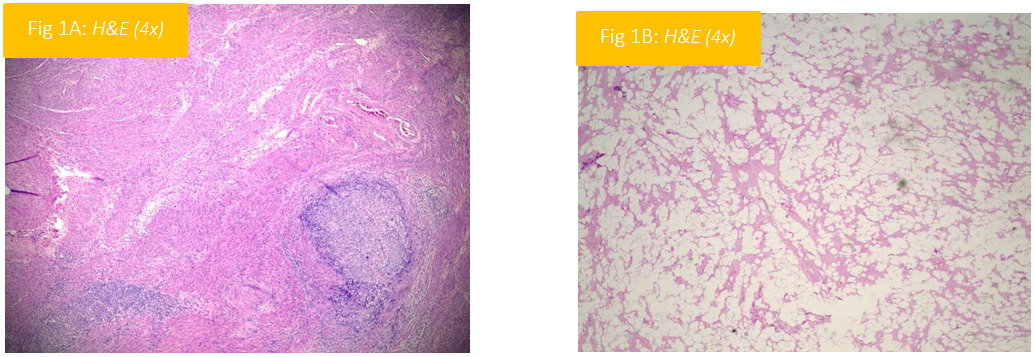
  • Figure 1A. carcinosarcoma of the uterus adjacent to leiomyoma
    Figure 1B. smooth muscle tissue dispersed with adipocytes consistent with lipoleiomyoma
    Download
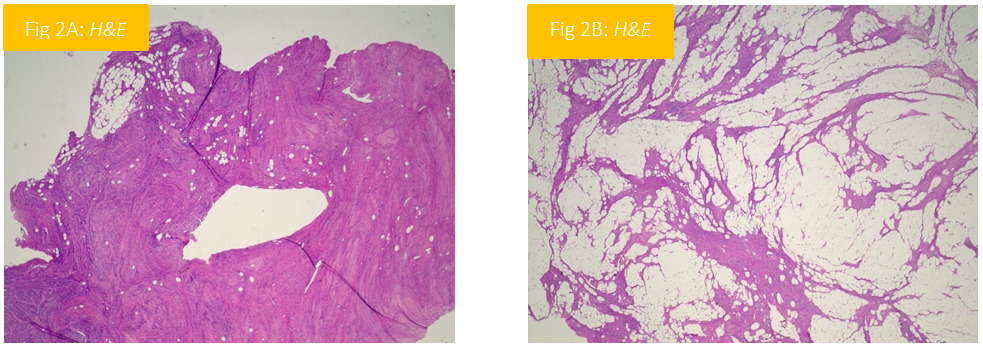
  • Figure 2A and 2B. Lipoleiomyoma with differing degrees of adipocytes
    Download

Error

Sorry, something went wrong. Please try again.

If this problem reoccurs, please contact Scholastica Support

Error message:

undefined

View more stats

Abstract

Introduction

Uterine lipoleiomyomas are benign neoplasms that are not often seen in clinical practice. First described in 1965, these entities were recognized by a composition of intermixed smooth muscle, mature adipocytes, and fibrous tissue [2,4]. The incidence of lipoleiomyoma has always been accepted as 0.03-0.2% by Willen et al. in 1978 [1,4]. However, recent studies propose a higher incidence at 2.9%, such as Akbulut et al. in 2014. Most commonly found in the uterus, these neoplasms can rarely be associated with the cervix, broad ligament, peritoneum, ovary, as well as other extrapelvic locations. These benign tumors present similarly to uterine leiomyomas in peri- and post-menopausal women with obesity, with symptoms of pelvic/abdominal pain, mild abnormal vaginal bleeding, constipation, increased urinary frequency, and possibly a palpable mass.

Methods

This case series, diagnosed in February and March of 2023, includes the presentation, clinical management, and ultimately pathologic diagnosis of two separate uterine lipoleiomyomas.

Results

A 51-year-old, G3P2, female presented with six months of severe post-menopausal bleeding, severe left-lower quadrant pelvic pain, and lightheadedness. A transvaginal ultrasound revealed a heterogeneous, thickened endometrium of 3.9 centimeters and a probable left ovarian dermoid cyst. CT showed distension of endometrial cavity due to polyps and/or submucosal masses, as well as a fat-containing mass in the uterine corpus. Hysteroscopy with dilation and curettage was performed with pathology of high-grade malignancy. Differential diagnosis at this time included high-grade stromal sarcoma, undifferentiated carcinoma, adenosarcoma, or malignant mixed Mullerian tumor. Patient underwent MRI due to concern for malignancy, which showed FDG-avid endometrial thickening with no other FDG-avid areas of concern. Histopathologic diagnosis found carcinosarcoma of the uterus, two positive lymph nodes, and an incidental finding of lipoleiomyoma. Further medical management will include chemotherapy and vaginal cuff brachytherapy for uterine carcinosarcoma.

A 50-year-old, G5P5, female presented with increasing vaginal spotting and worsening urge incontinence. CT showed increased size of heterogeneous mass in right lateral uterine wall, consistent with previously identified fibroid/leiomyoma. An adjacent fat-containing lesion was identified within the uterine wall. Patient underwent MRI which revealed large uterine mass at fundus with associated fatty component. Due to abnormal rate of growth of fibroid and fat component, there was concern for uterine sarcoma and/or malignant transformation of leiomyoma. Histopathologic diagnosis found lipoleiomyoma with benign atrophic endometrium, paratubal cysts of bilateral fallopian tubes, and follicular cyst of the right ovary. Follow-up in one year was recommended.

Conclusion

Lipoleiomyomas are uncommon benign entities, occurring most commonly in post-menopausal women, similarly to uterine fibroids. While asymptomatic patients can be managed conservatively, these tumors can cause vaginal bleeding, pain, and urinary or fecal incontinence and can be definitively treated with hysterectomy. While imaging is necessary to initially characterize the lesion and determine malignancy concern, histopathologic diagnosis remains the gold standard for diagnosis. Lipoleiomyomas are associated with other gynecologic malignancies, metabolic disorders, and rarely tumor-to-tumor metastasis. For this reason, careful clinical evaluation and surgical management are required for complete evaluation of the patient.

INTRODUCTION

Uterine lipoleiomyomas are benign neoplasms that are not often seen in clinical practice. First described in 1965, these entities were recognized by a composition of intermixed smooth muscle, mature adipocytes, and fibrous tissue (Manjunatha, Ramaswamy, et al. 2010; Johari, Koshy, et al. 2014). The incidence of lipoleiomyoma has always been accepted as 0.03-0.2% by Willen et al. in 1978 (Yuan, Chen, et al. 2021; Johari, Koshy, et al. 2014). However, recent studies propose a higher incidence at 2.9%, such as Akbulut et al. in 2014. Most commonly found in the uterus, these neoplasms can rarely be associated with the cervix, broad ligament, peritoneum, ovary, as well as other extrapelvic locations (abdominal wall, inguinal canal, vulva, and lung). These benign tumors present similarly to uterine leiomyomas in peri- and post-menopausal women with obesity, with symptoms of pelvic/abdominal pain, mild abnormal vaginal bleeding, constipation, increased urinary frequency, and possibly a palpable mass. We report two separate cases of uterine lipoleiomyoma seen at our institution from presentation, clinical management, and ultimately pathologic diagnosis.

CASE REPORTS

A 51-year-old female presented with six months of severe post-menopausal bleeding, severe left-lower quadrant pelvic pain, and lightheadedness. Gynecologic/obstetric history was as follows: gravida 3, para 2, no history of abnormal cervical cancer screening, and no supplemental hormone use. The patient reported no personal or family history of gynecologic or breast cancer. Of note, patient’s body-mass index (BMI) was 30.2, and she had a 50 pack-year smoking history. On physical exam, there were no identifiable abnormalities of the external genitalia, vagina, or cervix. No palpable masses were appreciated on bimanual exam, nor did the patient report pain on exam. Transvaginal ultrasound revealed a heterogeneous, thickened endometrium of 3.9 centimeters and a probable left ovarian dermoid cyst. Computed tomography (CT) showed distension of endometrial cavity due to polyps and/or submucosal masses, as well as a fat-containing mass in the uterine corpus. Hysteroscopy with dilation and curettage was performed with pathology of high-grade malignancy. Differential diagnosis at this time included high-grade stromal sarcoma, undifferentiated carcinoma, adenosarcoma, or malignant mixed Mullerian tumor. Patient underwent magnetic resonance imaging (MRI) due to concern for malignancy, which showed FDG-avid endometrial thickening with no other FDG-avid areas of concern. Surgical treatment included a robot-assisted total laparoscopic hysterectomy, bilateral salpingoophrectomy, sentinel lymph node mapping, and pelvic/peri-aortic lymph node dissection without complication. Histopathologic diagnosis found carcinosarcoma of the uterus, two positive lymph nodes, and an incidental finding of lipoleiomyoma (see figure 1A and 1B). Further medical management will include chemotherapy and vaginal cuff brachytherapy for uterine carcinosarcoma.

Figure 1A
Figure 1A.carcinosarcoma of the uterus adjacent to leiomyoma
Figure 1B. smooth muscle tissue dispersed with adipocytes consistent with lipoleiomyoma

A 50-year-old female presented with increasing vaginal spotting and worsening urge incontinence. Gynecologic/obstetric history was as follows: uterine fibroid(s), gravida 5, para 5, no history of abnormal cervical cancer screening, current Mirena intrauterine device. The patient reported no personal or family history of gynecologic or breast cancer. Of note, patient’s body-mass index (BMI) was 32.7, and she had previously undergone bariatric surgery. On physical exam, there were no identifiable abnormalities of the external genitalia or vagina. The cervix was poorly visualized due to posterior fornix mass. The patient did not report pain on exam. Computed tomography (CT) showed increased size of heterogeneous mass in right lateral uterine wall, consistent with previously identified fibroid/leiomyoma. An adjacent fat-containing lesion was identified within the uterine wall. Patient underwent magnetic resonance imaging (MRI), which revealed large uterine mass at fundus with associated fatty component. Due to abnormal rate of growth of fibroid and fat component, there was concern for uterine sarcoma and/or malignant transformation of leiomyoma. Surgical treatment included a robot-assisted total laparoscopic hysterectomy, bilateral salpingectomy, and right oophorectomy for right ovarian cyst grossly identified at time of operation without complication. Histopathologic diagnosis found diffuse smooth muscle with increased cellularity and without mitotic nuclei or nuclear atypia interspersed with variable densities of adipocytes consistent with lipoleiomyoma with benign atrophic endometrium, paratubal cysts of bilateral fallopian tubes, and follicular cyst of the right ovary. No other management was indicated at this time, and follow-up in one year was recommended.
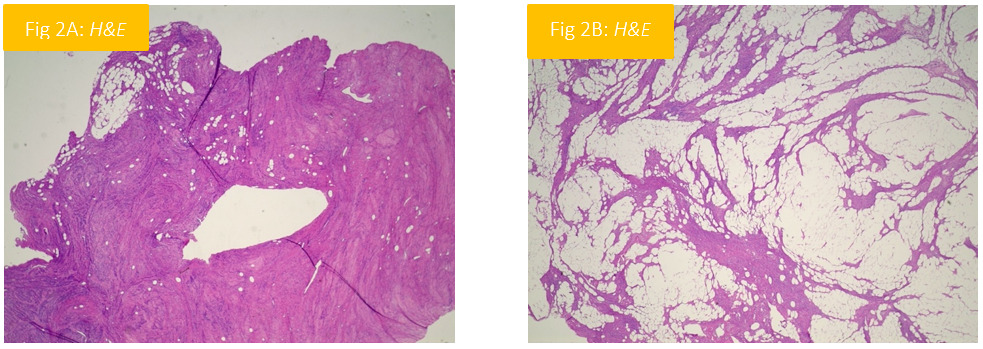
Figure 2A and 2B
Figure 2A and 2B.Lipoleiomyoma with differing degrees of adipocytes

Pathogenesis

The pathogenesis of uterine lipoleiomyomas is somewhat perplexing since the uterus inherently contains no adipose tissue. Historically, there were many hypotheses explaining the origin of adipocytes, such as surgical deposition of adipose tissue into the myometrium, migration of adipocytes from peritoneal or retroperitoneal fat, as well as others. Currently, it is accepted that the origin of these adipocytes is multifactorial. One accepted theory hypothesizes the lipomatous component arises from direct transformation of totipotent mesenchymal cells in response to changes within the microenvironment of the tissue (Yuan, Chen, et al. 2021; Manjunatha, Ramaswamy, et al. 2010; Wilke, Benson, et al. 2022). These stressors include hypoxia and serum starvation, due to poor vascular availability within these lesions. Ono et al. isolated populations of myometrial cells with progenitor properties that could respond to hypoxic conditions by differentiating into myocytes and adipocytes. Studies have shown higher expression of hypoxia-inducible factor 1-alpha (HIF-1a) in avascular areas of uterine leiomyomas compared to healthy myometrium, suggesting a degree hypoxia and nutrient deprivation of the leiomyoma compared to healthy tissue that could transform mesenchymal cells into adipocytes. This transformation of progenitor cells and proliferation of the fibroid may be controlled by the Wnt signaling pathway via an “adipogenic switch”. In 2005, Arango et al. described differentiation of uterine myocytes to adipocytes in response to beta-catenin/Wnt signaling pathway suppression (Yuan, Chen, et al. 2021).

Other studies found chromosomal abnormalities, such as t(5;12) and t(12;14), present in lipoleiomyomas. Chromosomal rearrangements involving the long arm of chromosome 12 have been described in traditional leiomyomas, as well as lipomas. There is speculation whether these chromosomal translocations of traditional leiomyomas, lipoleiomyomas, and lipomas are related, due to the paucity of chromosomal studies due to formalin fixation of tissue (Yuan, Chen, et al. 2021).

There is also an effect of estrogen levels on leiomyoma cell proliferation (Manjunatha, Ramaswamy, et al. 2010). Although most leiomyomas typically decrease in size after menopause due to insufficient estrogen and decreased levels of sex hormone-binding globulin, the bioavailability of estrogen increased post-menopause which may contribute to lesion growth (Yuan, Chen, et al. 2021). Estrogen therapy is widely-used for management of menopausal symptoms, and this degree of long-term estrogen exposure may be a factor in lesion growth or lipoleiomyoma formation through secreted frizzled-related protein 1 (SFRP1) which inhibits WNT/beta-catenin signaling (Yuan, Chen, et al. 2021). Hyper-estrogen states have been associated with lipoleiomyoma occurance, such as endometrial hyperplasia, polyps, endometriosis, adenomyosis, and gynecologic cancers (Yuan, Chen, et al. 2021; Wilke, Benson, et al. 2022). Associated metabolic disorders with hyperestrogenic states have also been shown to play a role in the development of lipoleiomyomas. Such conditions may include obesity, hyperlipidemia, hypothyroidism, hypertension, and diabetes mellitus (Yuan, Chen, et al. 2021; Manjunatha, Ramaswamy, et al. 2010; Wilke, Benson, et al. 2022). Although an association between metabolic disorders and hyperestrogenic states have been seen in patients with lipoleiomyoma, there have been cases where no metabolic disorder was found. Nevertheless, prompt screening for metabolic disorders, hyperestrogen etiology, or gynecologic malignancy is warranted when a suspected leiomyoma has a lipomatous component.

PRESENTATION

Lipoleiomyomas typically occur in peri- or post-menopausal women with obesity. Although most are asymptomatic, some patients will present with symptoms similar to that of an uterine leiomyoma: abnormal uterine bleeding, pelvic/abdominal pain, constipation, urinary incontinence, and/or a palpable mass (Yuan, Chen, et al. 2021; Manjunatha, Ramaswamy, et al. 2010; Wilke, Benson, et al. 2022). Severe complications include uterine prolapse and inversion, but this is extraordinarily rare (Yuan, Chen, et al. 2021). Tumor markers are often within normal ranges.

IMAGING

Imaging studies of pelvic tumors help guide diagnosis, management, and if necessary surgical treatment. Ultrasound is the first-line imaging modality of any pelvic mass (Johari, Koshy, et al. 2014). For lipoleiomyomas, ultrasound will show a well-circumscribed, heterogenous hyperechoic mass with hypoechoic ring on or in the uterine wall, with minimal vascularity (Yuan, Chen, et al. 2021). Computed tomography (CT) can better show the location of the lesion, as well as tissue components such as adipose tissue. On CT, the lipoleiomyoma appears as a rim of myometrium surrounding the tumor with intralesional adipose tissue. However, there is a possibility that exact location of the mass may not be evident on CT, as adnexal masses may appear as arising in the uterine wall and vice-versa (Wilke, Benson, et al. 2022; Johari, Koshy, et al. 2014). Magnetic resonance imaging (MRI) is the best modality for describing the architecture and location of the mass. On MRI, the tumor has high intensity on T1- and T2-weighted images, with slightly increased intensity than the surrounding skeletal muscle. Fat suppression techniques can confirm the presence of any fatty component (Manjunatha, Ramaswamy, et al. 2010; Wilke, Benson, et al. 2022). Although radiologic studies can help guide management, histopathological examination is required for definitive diagnosis (Manjunatha, Ramaswamy, et al. 2010; Wilke, Benson, et al. 2022).

HISTOPATHOLOGY

Histopathological examination includes a mixture of bland, spindle-shaped smooth muscle cells without atypia, mature adipocytes, and fibrous tissue (Yuan, Chen, et al. 2021; Manjunatha, Ramaswamy, et al. 2010). The adipocyte component may be as small as 5% or as large as 95%, but a fatty component of greater than 50% is usually observed. Mitotic activity, nuclear pleomorphism, lipoblasts, or atypical cells require further evaluation for malignancy, such as liposarcoma. Myxoid degeneration with or without cystic change, hyaline, and calcification may be seen in benign lipoleiomyomas (Yuan, Chen, et al. 2021). Immunohistochemistry demonstrates adipocytes strongly positive for S100, vimentin, and estrogen/progesterone receptors (ER/PR) with low Ki-67 activity and weakly positive smooth muscle actin (SMA) expression. The smooth muscle cells demonstrate strong positivity for SMA and desmin with partial positivity for ER, PR, and CD34 (Yuan, Chen, et al. 2021). The expression of ER and PR on adipocytes supports the association between hyperestrogenic states and growth, as well as a possible gynecologic origin for the adipocytes (Wilke, Benson, et al. 2022).

DIFFERENTIAL DIAGNOSIS

Differential diagnosis of fatty tumor of uterus includes lipoleiomyoma, mature ovarian teratoma, benign lipoma, degenerated traditional leiomyomas (benign or malignant), or liposarcoma (Manjunatha, Ramaswamy, et al. 2010; Wilke, Benson, et al. 2022). There have been reports of other gynecological malignancies co-existing with lipoleiomyomas, such as liposarcoma arising within a lipoleiomyoma, cervical cancer, or endometrial cancer.

MANAGEMENT

Treatment of lipoleiomyomas is dependent on the patient’s symptoms, if any. If asymptomatic, these patients can be managed with close observation alone. Careful follow-up and repeat imaging is also necessary to evaluate the rapid growth rate of the tumor and the high possibility of liposarcomatous change within the tumor, compared with traditional leiomyomas. For symptomatic patients, hysterectomy is preferred (Wilke, Benson, et al. 2022). Tumor-to-tumor metastasis is well-documented in uterine lipoleiomyomas, where malignancies may be found within the benign tumor. Several cases involving patients with a history of malignancy where breast and gastric adenocarcinoma was found within the uterine lipoleiomyoma have been documented (Kiyokoba, Yagi, et al. 2015). Clinicians and pathologists should be aware of this possibility in patients with a history of malignancy (Yuan, Chen, et al. 2021). If there is a question of malignancy, surgical management is recommended.

CONCLUSION

Lipoleiomyomas are uncommon benign entities, occurring most commonly in post-menopausal women, similarly to uterine fibroids. While asymptomatic patients can be managed conservatively, these tumors can cause vaginal bleeding, pain, and urinary or fecal incontinence and can be definitively treated with hysterectomy. While imaging is necessary to initially characterize the lesion and determine malignancy concern, histopathologic diagnosis remains the gold standard for diagnosis. Lipoleiomyomas are associated with other gynecologic malignancies, metabolic disorders, and rarely tumor-to-tumor metastasis. For this reason, careful clinical evaluation and surgical management are required for complete evaluation of the patient.

Submitted: February 19, 2024 EDT

Accepted: April 11, 2024 EDT

References

Johari, B., M. Koshy, et al. 2014. “Lipoleiomyoma: A Rare Benign Tumor of the Uterus.” Case Reports 2014. https:/​/​doi.org/​10.1136/​bcr-2014-205814.
Google ScholarPubMed CentralPubMed
Kiyokoba, R., H. Yagi, et al. 2015. “Tumor-To-Tumor Metastasis of Poorly Differentiated Gastric Carcinoma to Uterine Lipoleiomyoma.” Case Rep Obstet Gynecol 2015:352369. https:/​/​doi.org/​10.1155/​2015/​352369.
Google ScholarPubMed CentralPubMed
Manjunatha, H., A. Ramaswamy, et al. 2010. “Lipoleiomyoma of Uterus in a Postmenopausal Woman.” J Midlife Health 1 (2): 86–88. https:/​/​doi.org/​10.4103/​0976-7800.76219.
Google ScholarPubMed CentralPubMed
Wilke, S., J. Benson, et al. 2022. “Uterine Lipoleiomyoma: Case Report and Review of the Literature.” Radiology Case Reports 17 (3).
Google Scholar
Yuan, Y., L. Chen, et al. 2021. “Pathogenesis, Diagnosis, and Treatment of Uterine Lipoleiomyoma: A Review.” Biomedicine & Pharmacotherapy 142. https:/​/​doi.org/​10.1016/​j.biopha.2021.112013.
Google Scholar

Attachments

Powered by Scholastica, the modern academic journal management system